

When to Register a Company vs. Trade as a Sole Proprietor in South Africa
Starting a business in South Africa comes with a big decision: should you register a company or operate as a sole proprietor? Both options are legal and viable, but they come with different responsibilities, risks, and benefits. Let’s unpack the key differences to help you choose the right structure for your business.
What Is a Sole Proprietor?
A sole proprietor is an individual who runs a business in their personal capacity. There’s no separate legal entity—you and your business are one and the same.
Pros:
• Easy and inexpensive to set up (no registration with CIPC required)
• Fewer compliance requirements
• All profits go directly to you
Cons:
• You’re personally liable for all debts and obligations
• Limited access to funding or investment
• Business credibility may be lower for larger clients or tenders
Best for: Freelancers, consultants, and micro-businesses with low risk and simple operations.
What Is a Registered Company?
A registered company (typically a Pty Ltd) is a separate legal entity. It must be registered with the Companies and Intellectual Property Commission (CIPC) and comply with the Companies Act 71 of 2008.
Pros:
• Limited liability—your personal assets are protected
• Greater credibility with clients, suppliers, and funders
• Easier to scale and bring in partners or investors
Cons:
• Higher setup and compliance costs
• Annual returns and financial statements must be submitted
• More complex tax obligations
Best for: Businesses with growth ambitions, employees, or higher financial risk.
Key Factors to Consider
Here’s what to think about before choosing your structure:
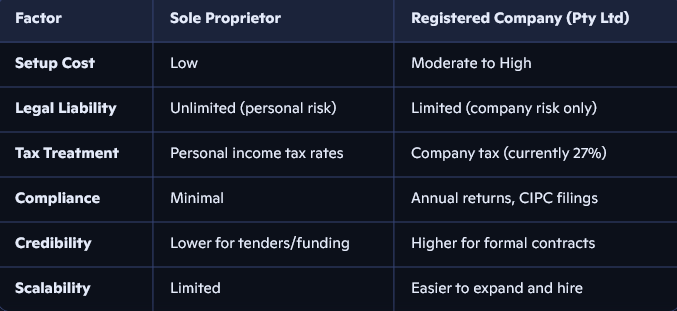
Final Thoughts
If you’re just starting out and want to test your business idea with minimal admin, trading as a sole proprietor may be the way to go. But if you’re planning to grow, hire staff, or seek funding, registering a company offers more protection and credibility.
Still unsure? We’re happy to help you assess your options based on your business goals and risk profile.

Emily Gomes (ICB Senior Bookkeeper)
Senior Bookkeeper
Emily obtained a Senior Bookkeeping National Certificate with ICB and has relevant experience. She has experience in digital marketing design and social media marketing as well as bookkeeping functions, VAT, payroll, PAYE, company secretarial, debtors and creditors for multiple companies.
QuickBooks Certified